
WWE Royal Rumble 1988: Retro 3 Things We Hated And 3 Things We Loved
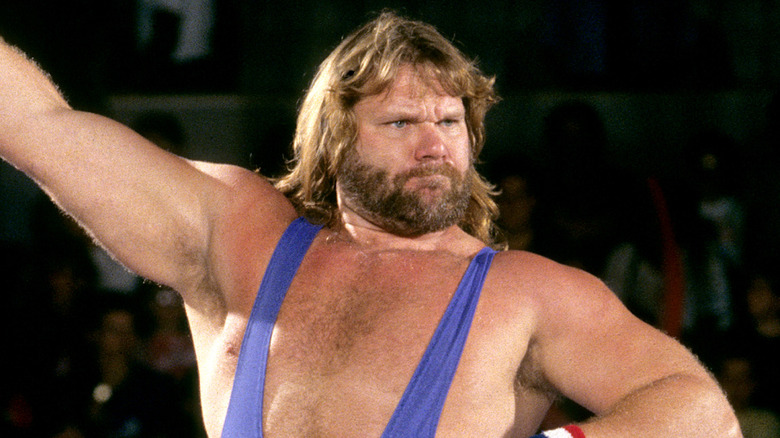
In 1988, WWE held its very first Royal Rumble event, not as a pay-per-view but instead broadcasting on the USA Network, future home of "WWE Raw." The TV special was built around the uniquely-formatted battle royal, which was thought up by producer Pat Patterson. In light of this weekend's latest Rumble, we've been looking back at various iterations of the event, and there's no better time to dive back to the beginning to figure out what worked (and didn't work) during the first installment.
Taking place in Hamilton, Ontario, Canada, the 1988 Royal Rumble card featured a singles match and two tag bouts in addition to the titular battle royal. The first Rumble featured just 20 men, with the decision made to increase the number to 30 (along with moving the event to PPV) the following year.
Like many of its contemporary events, the show is regarded by fans as a mixed bag, with some moments that live up to the hype while others fall flat. With that in mind, let's dig into the first Royal Rumble event to dissect the highs, the lows, and maybe even a few of the in-betweens.
Hated: Steamboat & Rude underwhelm in the opener
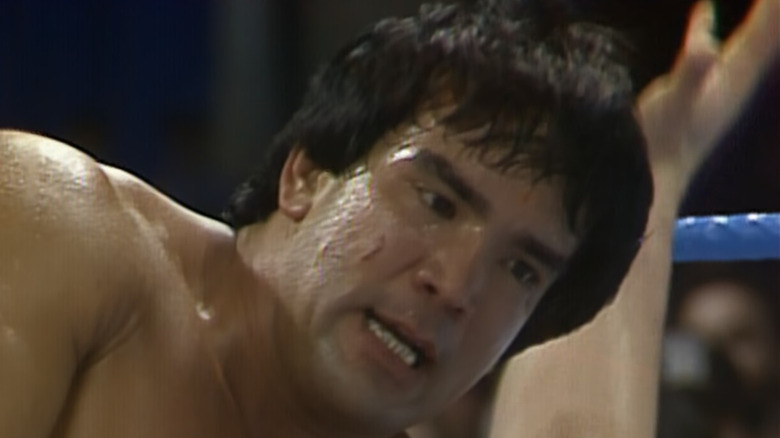
There's no denying that Ricky "The Dragon" Steamboat is among the greatest pro wrestlers of all time, but you wouldn't necessarily know it from watching this opening bout, which also features 29-year-old Rick Rude. Their match wasn't terrible, but the combination of the slow pace and disqualification finish made for a disappointing opener.
There are bright spots in there, including Steamboat's selling and some moments where the two performers ratchet up the intensity. However, that's offset by things like Steamboat letting his hand fall limp three times while held in a submission, although referee Dave Hebner didn't call the match in Rude's favor.
In the end, it seems as though Rude is successfully able to submit Steamboat for the win, with Hebner calling for the bell as "The Dragon" tapped out. However, as Rude makes his way to the back in celebration, Hebner relays to announcer Howard Finkel that Steamboat is actually the winner, with Rude being disqualified for throwing Hebner into the way of Steamboat's offense shortly before the final submission.
While it's not a terribly offensive match, considering the names involved, it could've been much better. The booking certainly didn't do either man any favors. Perhaps if McMahon knew how iconic the Royal Rumble would eventually become, he would've put more effort into booking an opener that stood the test of time. As it stands, though, this is merely a mediocre appetizer for the next two matches.
Loved: Jesse Ventura is the perfect commentator for his era
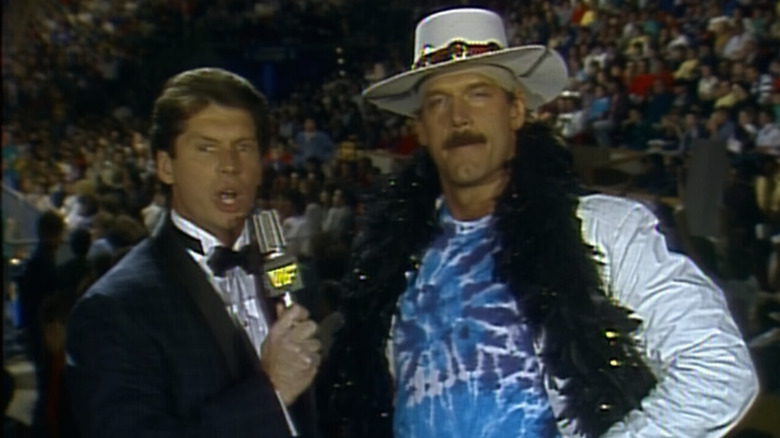
By 1988, Jesse "The Body" Ventura was retired from in-ring competition and had moved full-time to commentary, and he remains one of the WWE/WWF's most memorable voices. Joined on this show by Vince McMahon, Ventura plays the role of a heel color commentator to near perfection, naturally passing along information to the viewers while reacting to whatever he sees on the monitor.
As entertaining as he was, some believed Ventura felt out of place when he returned to WWE commentary last year, but he was certainly the right fit for the late 1980s. His bombastic voice and over-the-top personality are suited to the personas of the era, and Ventura can always be counted on to bring plenty of energy to a given moment.
On this particular night, Ventura also did an excellent job of emphasizing the impact of the Rumble stipulation. As the events of that match unfolded (more on the specifics later), Ventura's excitement was palpable in his voice as he and McMahon relayed the story to the audience. I believe it's fair to say that Ventura had a sizable impact on the fans' positive reception to the Royal Rumble, leading to its return year after year since.
Hated: What are we even doing here?
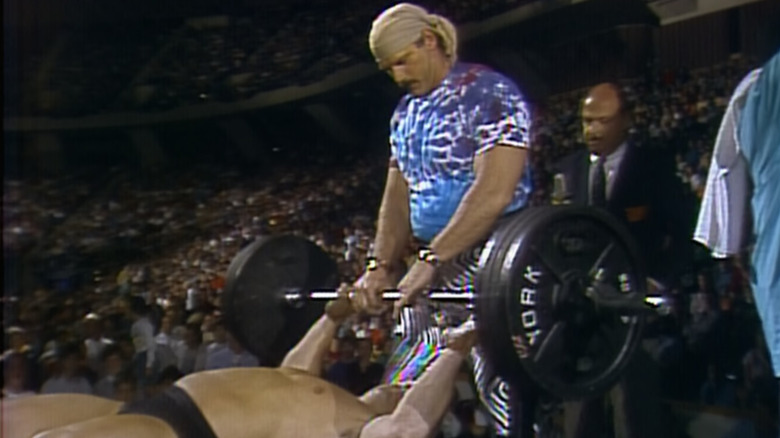
All that said, not all of Ventura's contributions on this night were successful. The absolute lowlight of the first Royal Rumble event took place after the opener, with an excruciating segment based around wrestler Dino Bravo supposedly breaking the world record for bench pressing. With Ventura acting as Bravo's spotter, and Frenchy Martin as his mouthpiece, this segment eats up nearly 20 minutes of time as those in attendance were forced to sit through Bravo lifting increasingly heavy weights.
Presumably, somebody backstage thought this would be an effective way to get heat on Bravo, but it's nothing more than a giant waste of time. If it was a bad five-minute segment, that'd be one thing, because it's just five minutes. Instead, this went on for longer than some matches on the show.
As we'll get to later on, this show has way too much filler, and this is the most egregious example. To make matters even worse, near the end, Bravo stands up and begins walking away as he pretends like he changed his mind, dragging the segment out even more. He finally makes his way back to the bench, only for Ventura to help him lift the record-breaking weight to get that good, good "heat." Congratulations, I guess?
Loved: The Jumping Bomb Angels arrive to save the show
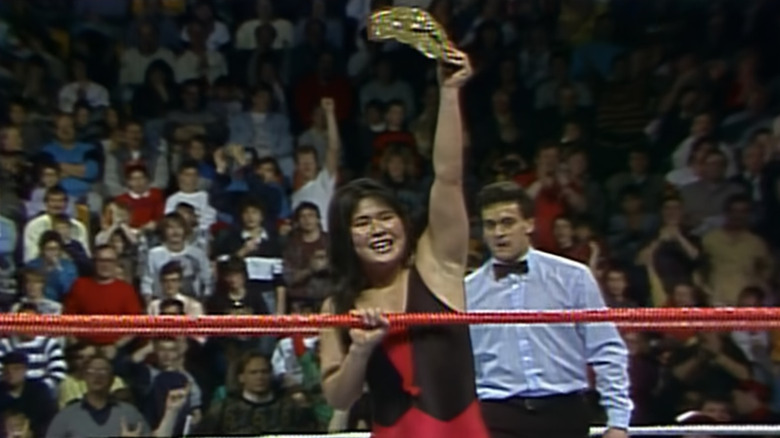
Thankfully, things take a substantial step up with the second match, which sees the Jumping Bomb Angels (Noriyo Tateno and Itsuki Yamazaki) capture the Women's Tag Team Championship from the Glamour Girls, Leilani Kai and Judy Martin.
Both teams were quite familiar with one another at this point, with a rivalry that began the previous year. As evidenced by the fan reaction to their entrance, the Jumping Bomb Angels seemed to be taking the promotion somewhat by storm, displaying a style that the vast majority of the audience wasn't yet familiar with, especially among women.
The bout isn't an all-time classic in terms of action, but it is a good match. The Glamour Girls know how to work as classic heels, in contrast to the high-octane offense of their babyface opponents, and they were given a surprising amount of time due to the two-out-of-three falls stipulation (though not as much as Dino Bravo's weightlifting segment).
Commentary for this match has aged poorly, with McMahon openly admitting he doesn't know Tateno or Yamakazi's names, instead referring to them as the Pink Angel and the Red Angel based on the color of their gear. Despite the popularity and talent of the Jumping Bomb Angels, their title win here wouldn't lead to an emphasis on women's wrestling in the company, and their time in WWE would fizzle out once the feud with the Glamour Girls came to an end later that year.
Hated: Hogan vs. Andre should've taken place in the main event
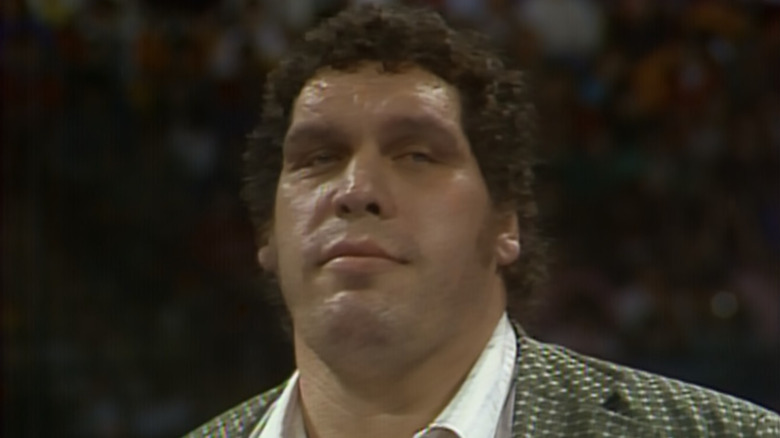
Heading into the show, Hulk Hogan had been the WWF Champion for four years, though he was at the tail end of that particular title run. Hogan was set to defend against Andre the Giant in a rematch from the previous year's WWE WrestleMania 3, but for whatever reason, their time on this show was relegated to a contract signing, with the match taking place a couple of weeks later.
Meanwhile, the main event (taking place after the Rumble itself) was a non-title tag match between The Islanders and the Young Stallions. The match isn't great, and it's undoubtedly a disappointing way to end a show that would later become historically significant.
Rather than having Andre beat Hogan for the world title weeks later, I argue that it would've made much more sense to have it cap off this show. The Rumble already wasn't planned as the main event, so it's not like the title change would overshadow something that happens later on. Plus, as mentioned previously, this show features way too much filler, and the Hogan-Andre match would've added something truly substantial to close things out.
Loved: The Royal Rumble experiment is a success
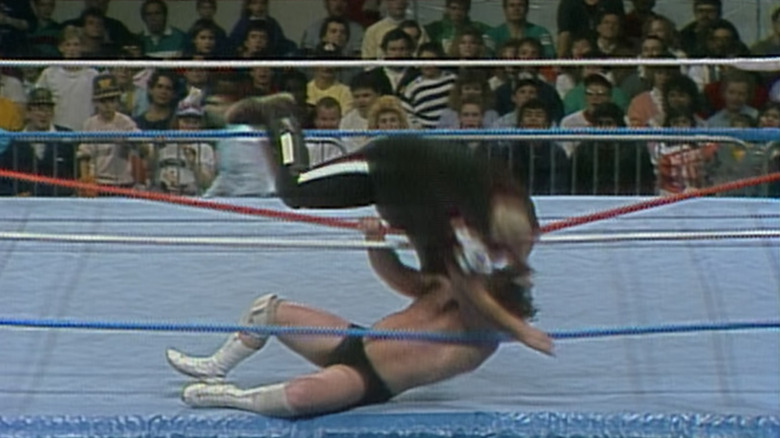
If this first televised edition of the Royal Rumble was a trial run, it was clearly a successful one, as the stipulation has returned each and every year since. It's not hard to see why, either. Although future performers would improve on the formula, this first iteration deserves credit for establishing the rules and connecting with the audience, ensuring more Rumbles to come.
Though not exactly a full star-studded affair, the first Rumble does feature some notable names, with Bret Hart and Tito Santana as the first two competitors to take part. They're soon joined by wrestlers like Jake "The Snake" Roberts, The Ultimate Warrior, and the eventual winner: "Hacksaw" Jim Duggan.
I won't lie; to me, Duggan is a strange choice for the first Rumble winner. That said, fans in attendance seemed ecstatic when he eliminated The One-Man Gang, so I can't judge the decision too harshly. The win didn't really earn him much, as he still had to take part in a tournament to try to win a shot at the WWF Championship, and he failed to advance to the end. Duggan's name will go down in the history books as the first-ever (televised) Royal Rumble winner, however, as he and his dance partners succeeded in making sure the event was worth remembering.