

False Facts About WWE You Always Thought Were True
WWE has been around, in various iterations of its current name, since its founding as the Capitol Wrestling Corporation back in 1953, and over the many years, many misconceptions have somehow became commons truths amongst fans. From things that are believed to be banned, from blading to different moves in the ring, that have unbanned then forbidden once again over time, to lore that fans take as gospel, there are many false facts about WWE that many believe to be true.
The biggest false fact that many believe is that WWE is fake. While some moves, like punches, may not connect and are more theatrical, there are many things that are unavoidable, like a suplex, which are called bumps in the industry, that actually hurt the stars within the ring to take. Matches and winners are scripted, but there are many things that could happen before, or even during a match, that can flip the script, solidifying that WWE is certainly not fake.
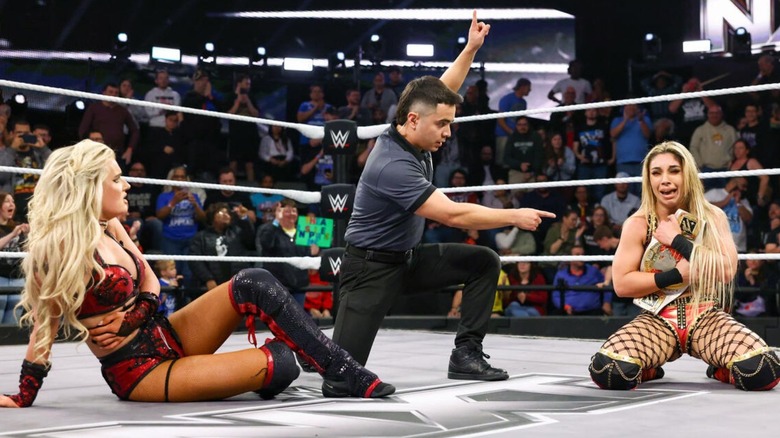
A match and it's winner can be scripted, but one wrong move could change the outcome in an instant. That could even lead to an accidental change of a title, which was recently seen in "WWE NXT." Thea Hail appeared to hit a springboard coffin drop just the wrong way, knocking the wind out of Women's North American Champion Blake Monroe, causing her to kick out late. The referee counted the fall, and Hail became new champion.
There are plenty of things that can happen to change a predetermined match the other way. WWE make be predetermined, but it's not fake, and there are reasons why old WWE ads would remind children and families to "not try this at home."
Hulk Hogan & Andre the Giant at WrestleMania III
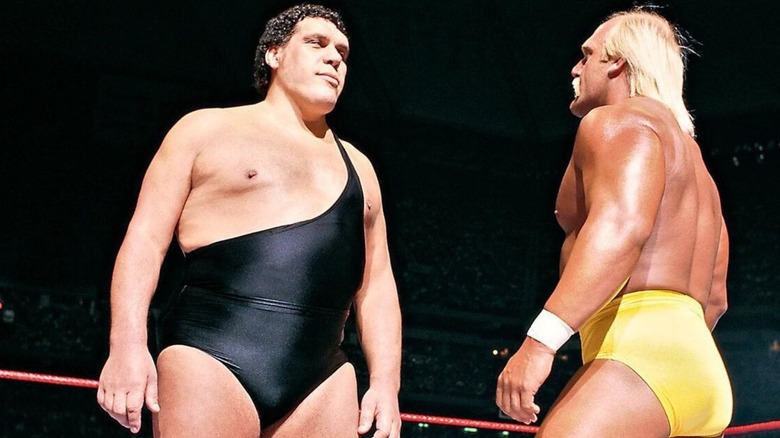
One of the most iconic moments in professional wrestling history is actually a false truth that almost every fan believes at one point in their life, especially early on in their fandom. When Hulk Hogan body slammed Andre the Giant during their match for the World Heavyweight Championship at WrestleMania 3 in the Pontiac Silverdome on March 29, 1987, the then-WWF touted it as the first time Andre had been slammed. Hogan was celebrated after retaining the gold, and the lore lived on for years.
Actually, Andre had been slammed plenty of times, including by Hogan, prior to that now-iconic moment. Hogan, playing the heel at the time, slammed Andre during a match at Shea Stadium in 1980. Others who slammed Andre prior to the WrestleMania moment include Butcher Vachon, who slammed the giant as a bet at Soldier Field, Japanese legend Riki Chosuhu, who hurt himself slamming Andre in 1984 in NJPW, and Strong Kobayashi, who hit the move to Andre as early as 1972 in Morioka, Japan during a two out of three falls match. The Wild Samoans teamed up to get Andre up for a slam at a Mid-South Wrestling show in 1982, and the legendary Antonio Inoki also slammed Andre, with ease, during the Kagoshima Tag League.
While it may be a false truth, it's a relatively harmless one in the grander scheme of professional wrestling lore. It doesn't appear to be anything the oftentimes outspoken Andre ever contested before his death in 1993.
'Banned' Moves
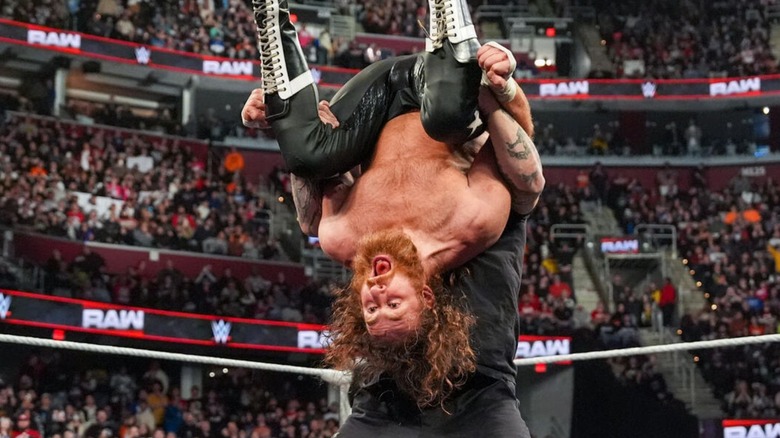
There have been various moves "banned" within WWE over the years, and a common misconception is that they remain banned and off limits for everyone at all times, never to be seen again. With matches in the company being scripted, some banned moves are approved on a case-by-case basis, oftentimes due to their shock value. One of those banned moves is the piledriver, which fans saw used multiple times at the end of 2024, into 2025, by Kevin Owens.
The move consists of a wrestler getting their opponent up and inverted, with the opponent's head down. The wrestler them drops them head-first onto the mat, either sitting down, or kneeling. The move has its variations, including Owens' package piledriver, and even Kane and The Undertaker's Tombstone Piledriver, which was never banned. The move was more common throughout the 1980s into the 1990s, before it was banned in 2000 over concerns for wrestlers' safety. The ban came a few years after SummerSlam 1997 when "Stone Cold" Steve Austin was seriously injured with a reverse piledriver.
In Owen's case, as an in-ring veteran who used the move before his time in WWE, it was likely a bit easier to get approved for a few spots. He hit the move safely, despite what WWE might have told in storyline, to Randy Orton, Cody Rhodes, and Sami Zayn. The last time the package piledriver was used was on February 3, proving how sparingly the move is pulled out.
Another move previously banned in WWE is the Canadian Destroyer. The move was reportedly quietly unbanned, back when Vince McMahon was still in charge, possibly due to the move's popularity on social media, with clips circulating fast when it was hit in the ring. Penta uses the Mexican Destroyer, and newcomer Bad Bunny pulled out the move, with help from John Morrison, at WrestleMania 37.
Ban on Blood & Blading
As WWE moved away from the Attitude Era and the following Ruthless Aggression Era, into the time of the much-hated by fans "PG" Era around 2008, the company also moved away from wrestlers bleeding in the ring. "Blading" is a common practice within the professional wrestling ring, with wrestlers drawing something sharp across their foreheads, like a razor blade, to draw blood after running into a weapon like the side of a steel cage or the ring steps. The idea is to make the spot much more realistic, as if it was the move to draw blood.
While the practice was banned in the PG Era, in addition to the occasional accident (or stars being cut open the "hard way"), some stars went into business for themselves and bladed anyway. Batista reportedly chose to blade on the 800th episode of "WWE Raw," feeling as though his steel cage match against Chris Jericho required blood. He was fined $100K, and paid it and the fines of Jericho, the referee, and producer, as well.
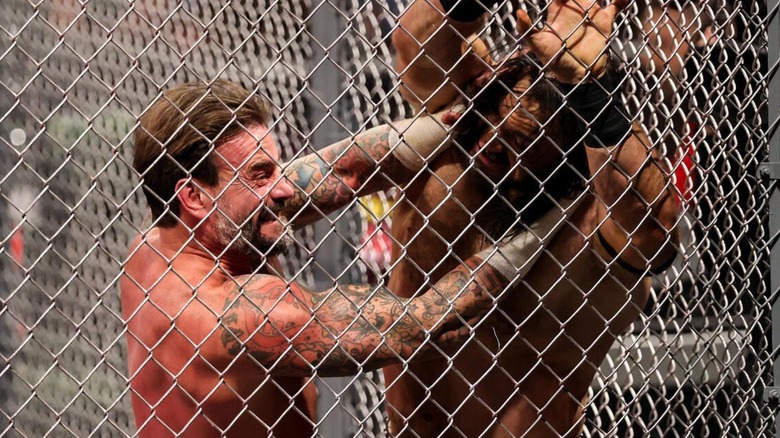
Like banned moves, however, blade jobs and blood in matches is also now approved on a case-by-case basis, usually for big matches. This was realized, and reported on, after CM Punk and Drew McIntyre's bloody Hell in a Cell match at Bad Blood 2024. Punk hit McIntyre with a tool box, busting him open, though the plan was reportedly for only Punk to bleed in the bout. Following the match, Dave Meltzer reported in the Wrestling Observer Newsletter that blading would be allowed in major matches and angles after Vince McMahon's official departure from the company.
Springiness of the Ring
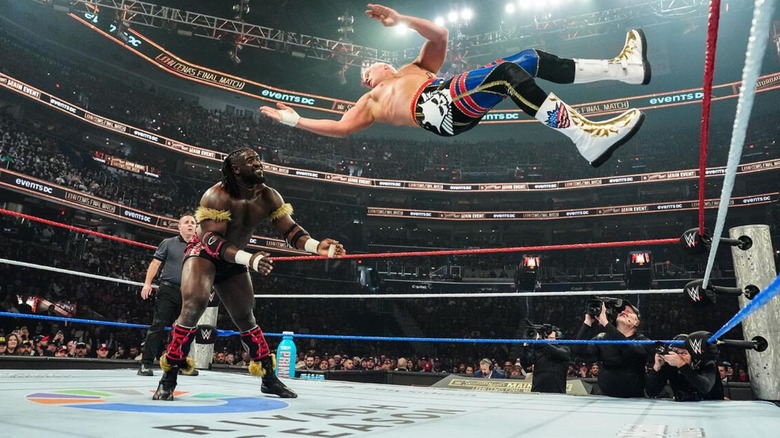
Another common misconception about WWE, and professional wrestling as a whole, is that the ring is like a trampoline and very springy. Talent like "The Young OG" Je'Von Evans and other high-flyers make the ring look quite bouncy, but that's not exactly the case. The ring of course, has some give, but it's not like a trampoline you'd find used in someone's backyard wrestling league. It's also not cheap, as it reportedly takes around $5K to $10K to set up a WWE ring properly, ensuring the safety of the stars wrestling within.
WWE rings are actually quite reinforced. According to the Sportster, below the canvas, the ring is constructed with 12 beams, four crossbeams, and eight more beams on top. Wooden boards are placed on top of those, then some foam padding to help protect the talent bumping in the ring, then comes the multiple layers of canvas covers. Rings used to have springs before the foam padding was introduced, but they were phased out by the 1990s, prior to WWE's Attitude Era, as they wore down too easily. When worn down, wrestlers could feel themselves hitting the wooden frames directly and nothing else would absorb the shock of them hitting the mat.
Even running the ropes is more difficult than it looks. Many influencers, WWE trainees, and others who attempt wrestling practice in this day and age post videos of their bruises from simply attempting to hit the ropes, as they are much harder than they look and not quite as easy to bounce off as one may think.